

How we keep GRT buses rolling, even after retirement
Every bus on the road keeps our community moving, safely carrying thousands of customers across Waterloo Region each day.
Behind that service, a lot of work is dedicated to ensuring our buses are reliable. That reliability even extends after Grand River Transit retires a bus. Did you know that after a long life with GRT, many buses continue to be used? They go to other transit systems or are sent around the world for a second career.
That’s possible because of the care each bus receives from GRT’s fleet and maintenance team.
In 2025, GRT retired 29 buses and added 44 new buses to its fleet. Many of our retired vehicles were purchased by other transit systems across Canada. Some went to Kings Transit Authority in Nova Scotia, others to OC Transpo in Ottawa or the Regional Municipality of Wood Buffalo in Fort McMurray, Alberta.
“GRT has a good reputation for maintaining its vehicles, which has contributed to strong interest from buyers when buses are retired,” said Matt Landowski, Manager of Transit Maintenance.
Other former GRT buses are sold through private buyers and resellers. These companies prepare and ship buses to be used in other countries.
Our buses have even found a second life as shuttle buses at Disney! There’s also the story of a retro GRT bus that was restored so it could be used in TV and movie productions.
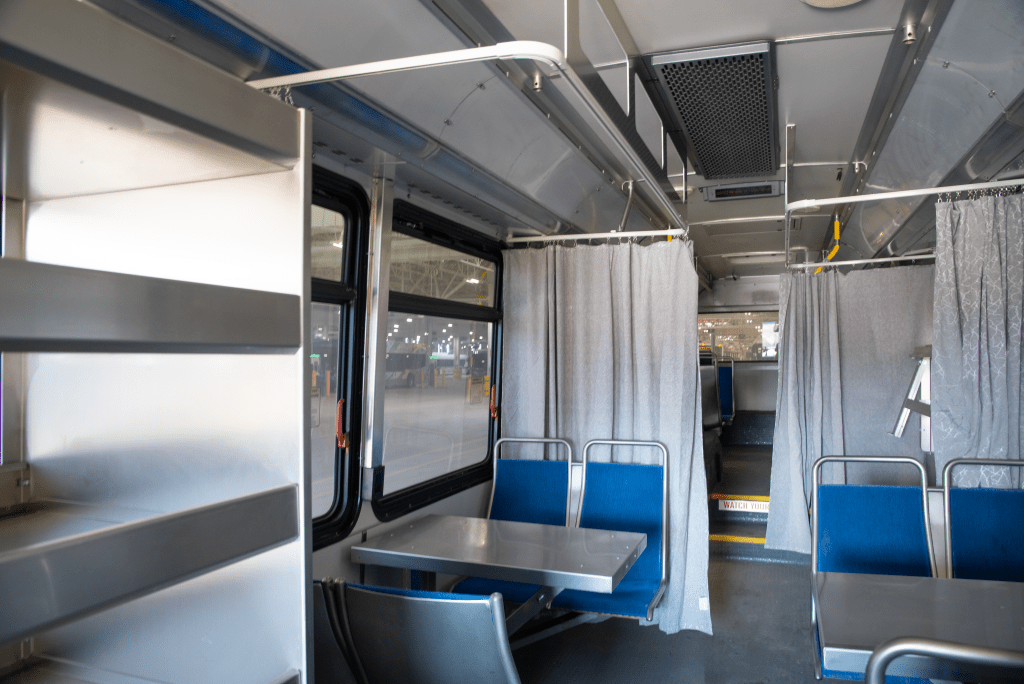
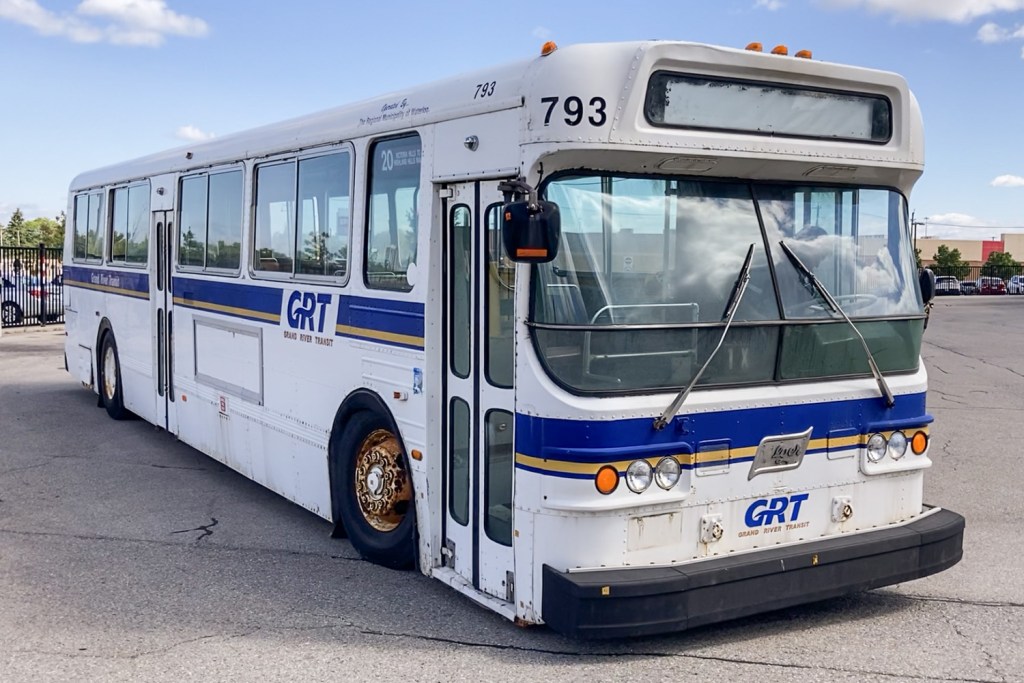
Not all retired GRT buses leave the region or travel far distances. Some remain close to home and are repurposed to support local needs in new and practical ways. During the COVID-19 pandemic, one bus was converted into a mobile vaccine clinic, expanding access to vaccinations across Waterloo Region. A bus is still being used by Public Health as a mobile service provider that can meet the community right where they live.
Others have been used for Waterloo Regional Police training exercises. A bus is also being prepared for future use by Region of Waterloo Paramedic Services for special events, where it will be equipped to support on-site medical response and community safety.
The lifecycle of conventional buses is around 14 years. “It’s not set in stone,” Landowski explained. “Decisions are guided by performance, condition and the timing of new bus deliveries.”
Regular inspections and ongoing maintenance play a key role in extending the life of each bus. GRT brings buses in for servicing every 10,000 kilometres, allowing the maintenance team to identify issues early. Major components are replaced as needed, helping buses reach high kilometre milestones.
“They typically get an engine replacement after about 500,000 kilometers,” said Oswald Resendes, GRT’s Assistant Manager of Transit Fleet Production, Maintenance Amenities. In many cases, buses can exceed one million kilometres before retirement, with some reaching as high as 1.2 million kilometres.
Before a bus leaves service, it goes through a detailed process to prepare it for its next stage, Resendes explained. Things like the fare boxes, cameras and radios are removed for reuse, and all identifying elements are taken off.