
What you need to know about the Region’s 2025 Plan and Budget
This fall, Regional Council are having big discussions about how best to invest in Waterloo Region.
These decisions will help us build a community that cares for all people and stewards the land for future generations. That’s the vision residents gave us as we built the “Growing with Care” Strategic Plan together.
So why pay attention to the Region of Waterloo’s 2025 Plan and Budget? The budget is how we put that plan into action. It funds programs and services that you use every day. It’s about investing in today AND being ready for tomorrow.
We know that municipal budgets aren’t everyone’s cup of tea. But read on… we’ve summarized the important things you need to know.

Budget facts
- Visit our EngageWR page to learn more about the 2025 Plan and Budget. You’ll find reports and information, video of past meetings, dates for upcoming meetings, and ways to have your voice heard.
- Like every year, Regional Council is looking to balance affordability while providing programs and services residents have told us they need.
- In the last few years, high inflation and interest rates have driven costs higher than usual.
- Council is considering different budget options:
- expand services for an estimated 12% tax increase
- keep our services similar for an estimated 9% tax increase
- reduce services for a tax increase of less than 8%
- Regional Council is starting with a preliminary operating budget of $1.4 billion, up from last year’s final operating budget of $1.25 billion. This is just a starting point and will be adjusted during council’s upcoming discussions.
- Final approval of the 2025 Plan and Budget is scheduled for December 11.
Did you know? The Region gets most of its revenue from three sources:
- Property taxes cover 41%
- Federal and Provincial funding covers 34%
- User fees and user rates cover 22%. These are the fares paid by GRT and ION riders, water bill payments, and more
Who is the Region of Waterloo?
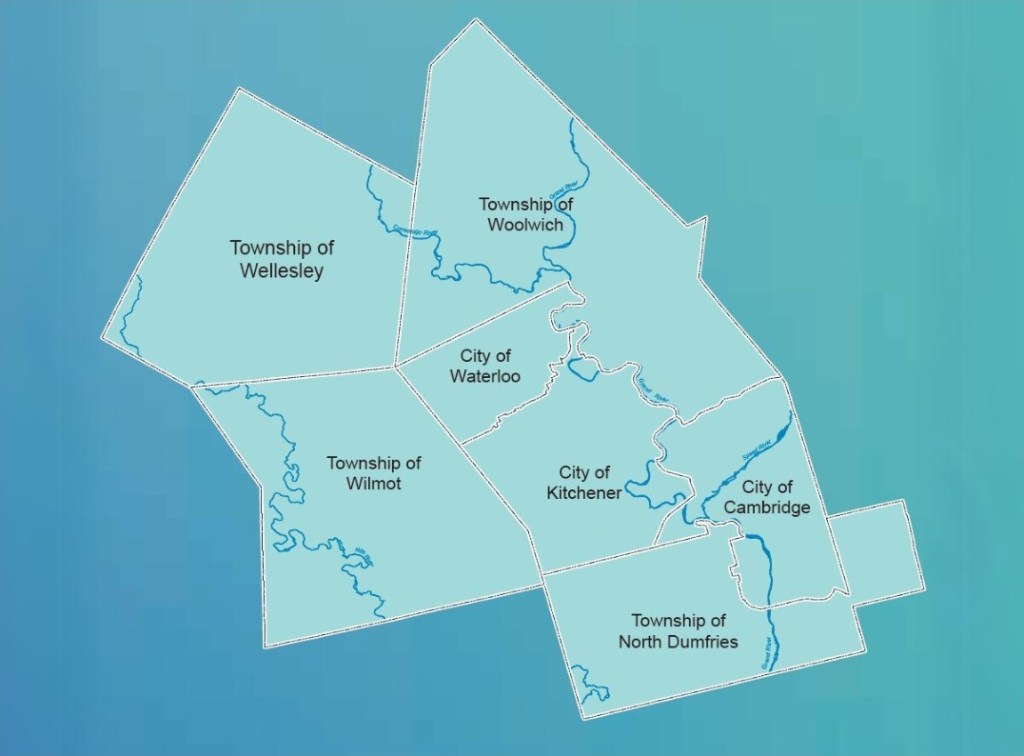
First, some basics. Here in Waterloo Region, we have a two-tier government consisting of the Region of Waterloo and seven area municipalities. In the Region of Waterloo are three cities (Cambridge, Kitchener and Waterloo) and four townships (North Dumfries, Wellesley, Wilmot and Woolwich). The Regional government works together with these cities and townships, each providing different services. In general, the Region provides services that span all these communities: items like public transit, paramedic services, water treatment, waste pick-up, regional roads, and affordable housing. The area municipalities provide more local services, like fire departments and parks and recreation.
What does the Region do?
The Region of Waterloo provides a range of programs and services that touch the lives of residents every day, including:
- Getting you where you need to go through GRT, ION, and MobilityPlus, major roadways and traffic signals, trails and the Regional airport.
- Providing homes for everyone by leading community-wide action planning, operating affordable housing programs, and providing long-term care and supportive housing for seniors.
- Keeping you healthy and safe through health inspections, dental clinics, infectious disease prevention and vaccinations, neighbourhood health programs, parenting and child health programs, Paramedic Services and road safety initiatives.
- Protecting our environment through safe drinking water and wastewater treatment, garbage collection and diversion programs.
- Supporting you to work through delivering employment and income support programs, coordinating affordable child care and economic development planning.
- Offering cultural opportunities and experiences through programs and services at libraries and museums.
- Committing to Reconciliation, Equity, Diversity and Inclusion by starting and keeping respectful relationships with First Nations, Inuit and Metis communities and helping to build a region where residents feel seen, valued, and heard.
Interested to learn more about the 2025 Plan and Budget? Visit our EngageWR page. There will also be public input meetings for the 2025 budget on November 6 and November 27. You can attend in person, watch online, or register to speak about what’s important to you.