
How the Region of Waterloo is addressing the water capacity constraint: pivotal solutions underway
Providing sustainable drinking water for the community as it grows is the Region of Waterloo’s top priority. As we address the water capacity constraint in the Mannheim Service Area, these updates share our progress.
Email waterupdate@regionofwaterloo.ca to receive regular updates. You can also visit www.regionofwaterloo.ca/watercapacity to see a FAQ and other information.
Work begins to prepare treatment plant for pivotal interim solution
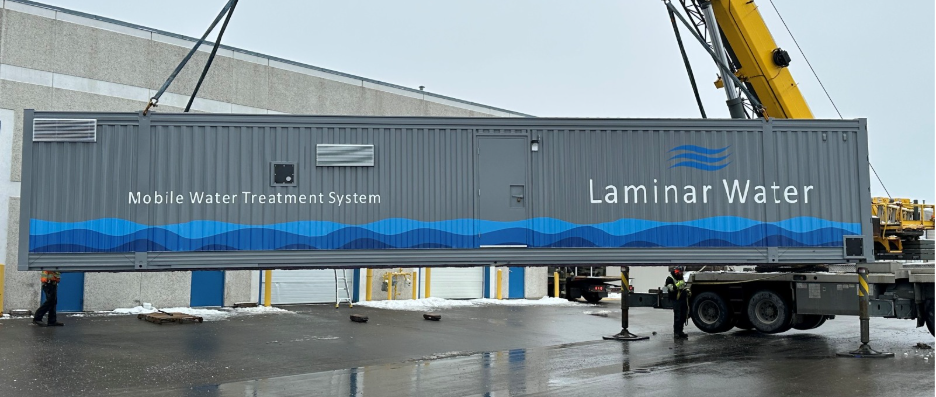
This month, the Region began work at the Mannheim Water Treatment plant (pictured at top of this post) on a pivotal solution to the water capacity constraint. Crews are preparing the Mannheim site for a temporary side stream filtration system, which filters solids out of river water. This will bypass part of the current treatment process that requires upgrades. The piloted unit is expected to arrive on site this spring and if successful, three additional units would add a total of 300 litres per second (L/s) of new capacity by June of 2027. This approach allows new capacity to get online sooner, serving as a bridge until the upgrades are complete and the side stream is no longer needed. Adding 300 L/s would be a significant step forward in addressing the water capacity constraint.
New approach to holding provisions will help planning move forward
To support development continuity, the Region is supportive of the use of a holding provision, which is a tool that Area Municipalities can use to help the planning process proceed. Where the Area Municipality has determined a holding provision is an appropriate tool, the Region’s comments will not object to the approval of the application. The holding provision could be lifted when the Region can confirm that water supply exists.
Repairs to support operational resiliency will conclude this month
Repairs to the Parkway Water Treatment system that will restore 60 L/s and support operational resiliency will be completed this month. Operational resiliency helps to protect water needed for planned and unplanned facility shutdowns, such as scheduled maintenance or emergencies. Repairs to the Greenbrook plant will restore another 80 L/s of capacity and will be completed in the fall. Work continues to expedite additional solutions to restore and add new capacity and support growth and development.
Critical step to development in stages is underway
An interim risk management framework outlining how development could proceed in stages while the capacity constraint is addressed is now underway. The goal is to protect the water system while balancing the need for growth, looking at opportunities to manage risks while protecting the existing drinking water system. The most up to date estimate of pending development activity is about 267 L/s of new water use (average day demand) and represents an average of 15 years of growth within the Mannheim Service Area. Staff aim to have the framework completed by May.
Expert in demand management leads conservation working group
Kirk Stinchcombe, an expert in demand management, will support the development of options to conserve water in the Mannheim Water Service Area. Conservation is an important part of water management. It helps keep community water use as low as possible, which helps with future demand planning, and is an effective way to protect capacity. The Region will work with Area Municipalities, the development community, and partners in sustainability and conservation to develop recommendations for Council in June. Kirk’s firm, Econics, specializes in municipal water sustainability.
About the water capacity constraint:
The Region of Waterloo operates a complex water system that relies on groundwater and water from the Grand River, including over 100 wells and 50 treatment facilities. In the fall of 2025, through ongoing work and updates to the long-term strategy for water supply, a capacity constraint in the Mannheim Service Area was identified. The Mannheim Service Area supplies water to Kitchener, Waterloo and parts of Cambridge, Woolwich, and Wilmot. The constraint is based on the Region’s ability to pump, store, treat, and distribute water to where it is needed to accommodate future growth, while also considering critical maintenance requirements. The Region is working to accelerate solutions to the constraint and ensure a sustainable supply of water for generations to come.
Council reports:
- March 11, 2026: General update on work underway
- March 11, 2026: Update on risk-based approach to staged development
- February 25, 2026: Clarifying Information
- February 10, 2026: 1980 Policy on Water Taking – Wilmot Township
- February 10, 2026: Regional Advisory Comments on Developments and Applications
- February 6, 2026: Pilot-Mannheim Temporary Side Stream Treatment
- January 28, 2026: Preliminary Water Capacity Constraint Solutions