

Exhibit celebrates soapstone carvings by Six Nations artist Wayne Sky
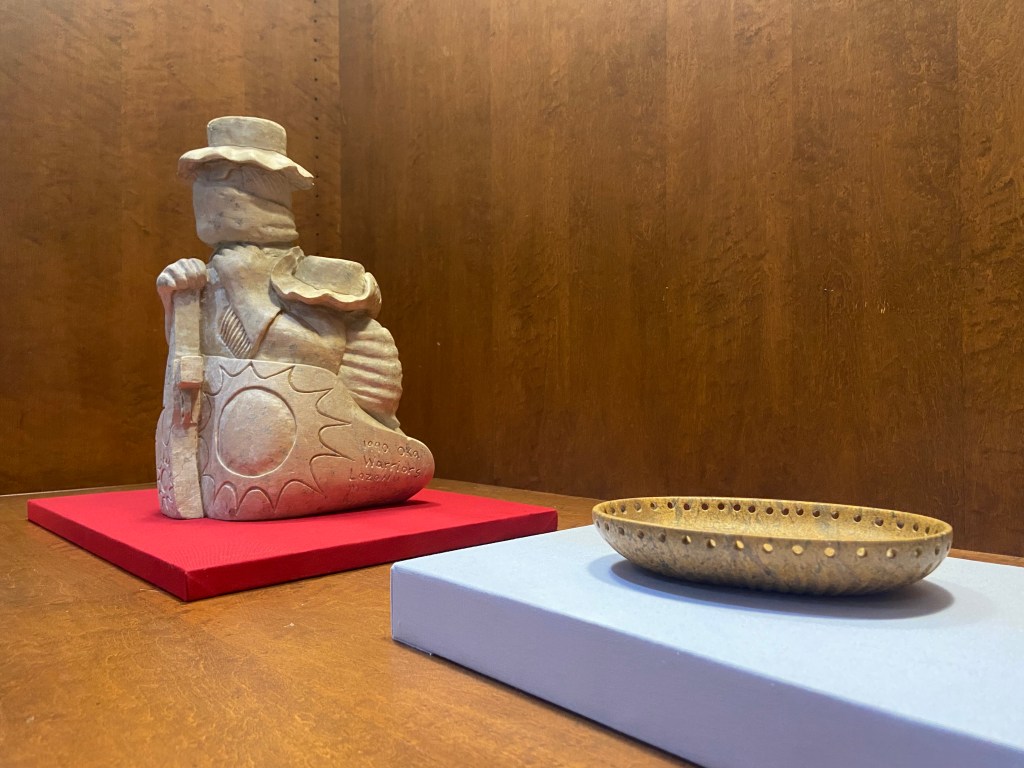
Indigenous artist Wayne Sky, a member of the Six Nations of the Grand River, created soapstone carvings representing animals, spirits, and cultural beliefs. Eleven of his artworks were on display this fall at the Region of Waterloo headquarters located at 150 Frederick Street in downtown Kitchener.
The Region is proud to host exhibits that honour and celebrate talented Indigenous artists, and the rich tradition of Indigenous art. The Region of Waterloo is working to showcase more Indigenous art at 150 Frederick Street in the future… stay tuned!
The Wayne Sky collection has now been loaned to City of Cambridge and the public can see these carvings at Cambridge City Hall until the end of 2024.
What is soapstone carving?
Soapstone carving is an art form that involves sculpting intricate stories from a single block of natural stone. Across various cultures, soapstone carvings has been used for storytelling, cultural preservation, and representation of significant beliefs and values.
Indigenous cultures have long utilized soapstone carvings to symbolize animals, spirits, and cultural ideologies. These carvings often portray tales, legends, and myths that have been passed down through generations, acting as visual narratives of Indigenous history, spiritual beliefs, and cultural customs. They preserve and share knowledge and stories within the community.
This traditional art form has been honed by artists for centuries. Soapstone carving is deeply intertwined with Indigenous peoples’ connection to the land, as the stone itself is sourced from the earth, reflecting a profound relationship with the natural world and the resources it offers.


Wayne Sky, 1949-2011
Wayne Sky, a member of the Wolf Clan of the Cayuga Nation, lived in the Ohsweken area of the Six Nations Reserve near Brantford, Ontario.
Wayne’s given name is SIN-HAS in the Cayuga language, which translates to “tall forest.” His passion for art began at a young age when he started crafting wooden masks at just 13 years old. Throughout his artistic career, carving remained Wayne’s primary form of expression. Growing up in Six Nations provided him with an abundance of inspiration, as his family and community members were actively involved in the arts. His brother Harlan specialized in totem poles and masks, while local Indigenous artist Garland Thomas was a skilled stone carver.
Harlan encouraged Wayne to explore wood carving, and Garland introduced him to soapstone. Wayne taught himself the necessary skills in both mediums to bring his artistic vision to three-dimensional life. In 1980, Wayne made the decision to leave his career in ironworking to focus on art full-time. His carvings often incorporate traditional stories and concepts, serving as a reminder of the enduring presence and practice of Haudenosaunee culture.
While Wayne typically created in stone, he also worked with moose and deer antlers, as well as wood. His repertoire included ceremonial masks and condolence canes.
Wayne’s work is showcased in a select few galleries in Ontario and New York. He gained recognition at the Pasadena Art Show in 1984, where he was awarded first prize. His pieces can be found in various private collections, as well as public collections such as the Iroquois Museum in Howes Cave, NY, and the McMichael Canadian Art Collection in Kleinburg, Ontario.
Research material courtesy of the Iroquois Museum, Howes Cave, NY.